
Corticosteroid injection
The most commonly used option. It reduces inflammation within the joint, helps relieve pain, and may improve mobility.
Image-guided joint injections can reduce pain, calm inflammation, and improve mobility in arthritic or degenerative joints.
Image-guided joint injections that calm inflammation, improve lubrication, or support healing in arthritic and degenerative joints.
The most commonly used option. It reduces inflammation within the joint, helps relieve pain, and may improve mobility.
Hyaluronic acid can help lubricate and cushion the joint, and may improve movement and reduce stiffness, especially in knee osteoarthritis.
Uses the patient's own blood to promote healing and may improve pain and joint function over time when appropriate at the clinic.
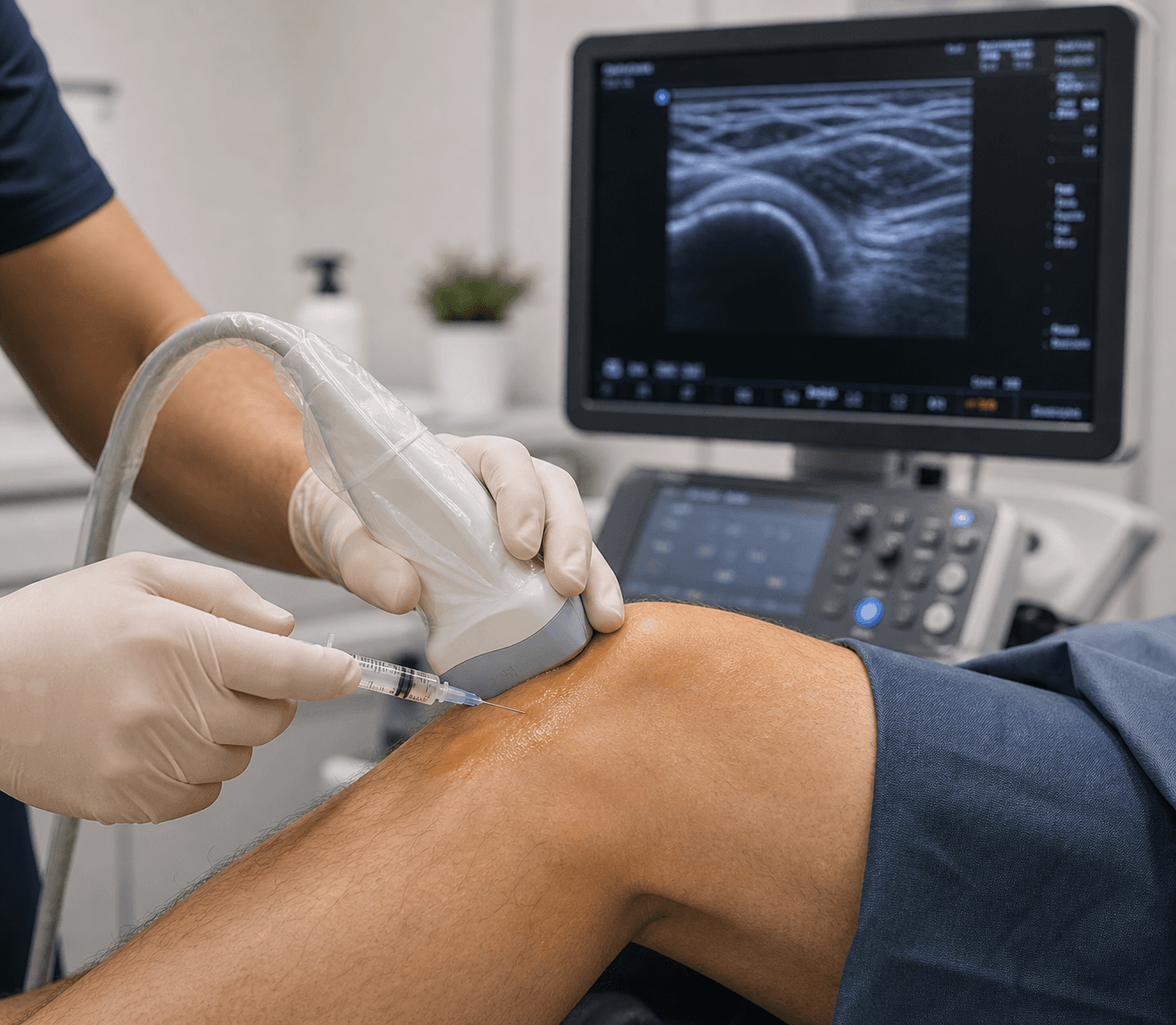
Image guidance supports precise treatment for arthritic joints.
The most common injection combines a corticosteroid with a local anesthetic. The steroid reduces inflammation inside the joint, while the local anesthetic provides immediate short-term relief and can help confirm the joint as the pain source.
Hyaluronic acid injections improve joint lubrication and may reduce stiffness, particularly in knee osteoarthritis. Platelet-rich plasma (PRP) uses the patient's own blood to support healing and may be appropriate in selected cases.
These procedures are minimally invasive and image-guided, offering a focused approach to joint pain with a straightforward recovery. They can offer meaningful improvement in pain and mobility, reduce the need for ongoing medication, and in some cases help delay or avoid surgery.
The clinic can review your symptoms, prior treatment, imaging, and whether this procedure fits into your care plan.
If you have a question after a recent procedure, call the clinic directly rather than waiting for an online response.