
Advanced & Specialized Procedures
Advanced image-guided options for selected chronic or complex pain conditions when standard therapies have not provided enough relief.
View pageA stellate ganglion block places local anesthetic near a nerve cluster in the neck to temporarily reduce sympathetic nerve activity.
An ultrasound-guided injection of local anesthetic near a nerve cluster in the neck, used to temporarily reduce sympathetic nerve activity.
The stellate ganglion block is most often considered for patients with symptoms driven by sympathetic nervous system overactivation. By temporarily reducing that activity, some patients experience significant relief in hyperarousal, anxiety, and PTSD-related symptoms - often quickly enough to improve engagement with other therapies.
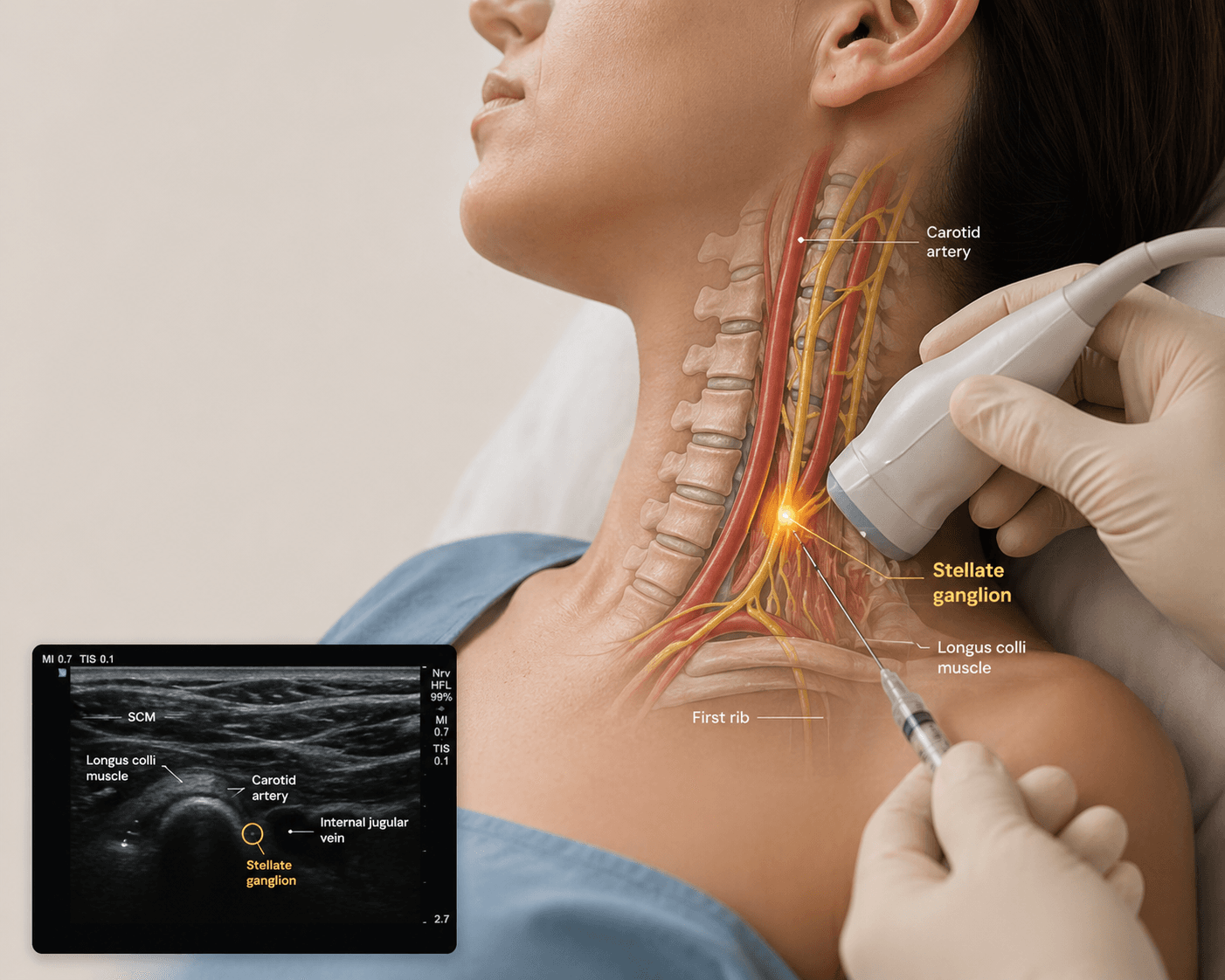
A specialized block targets sympathetic nerve activity in the neck.
Off-label context
The use of stellate ganglion block for PTSD and related conditions is considered off-label. Patients should discuss the available evidence, realistic expectations, and the role this treatment plays within a broader care plan before proceeding.
Patients with a known allergy to local anesthetics such as bupivacaine or Sensorcaine should not proceed with this procedure. Other contraindications and safety considerations will be reviewed individually by the treating physician.
Alternative treatments for PTSD and related conditions include psychotherapy, pharmacological options such as SSRIs, and other evidence-based interventions. This block is typically part of a broader care plan rather than a standalone treatment.
The clinic can review your symptoms, prior treatment, imaging, and whether this procedure fits into your care plan.
If you have a question after a recent procedure, call the clinic directly rather than waiting for an online response.