
Interlaminar epidural
Placed from the middle of the back or neck so medication can spread more broadly around multiple nerves.
Epidural injections place medication into the epidural space around the spine to reduce inflammation and relieve pain caused by irritated or inflamed spinal nerves.
Fluoroscopy-guided injections that place medication around irritated spinal nerves to reduce inflammation and ease arm or leg pain.
Placed from the middle of the back or neck so medication can spread more broadly around multiple nerves.
Targets a specific nerve root more precisely and is often used for pain radiating into the arm or leg.
Placed near the tailbone in the sacral area to provide broader coverage of lower spinal nerves, often when prior surgery has caused scar tissue.
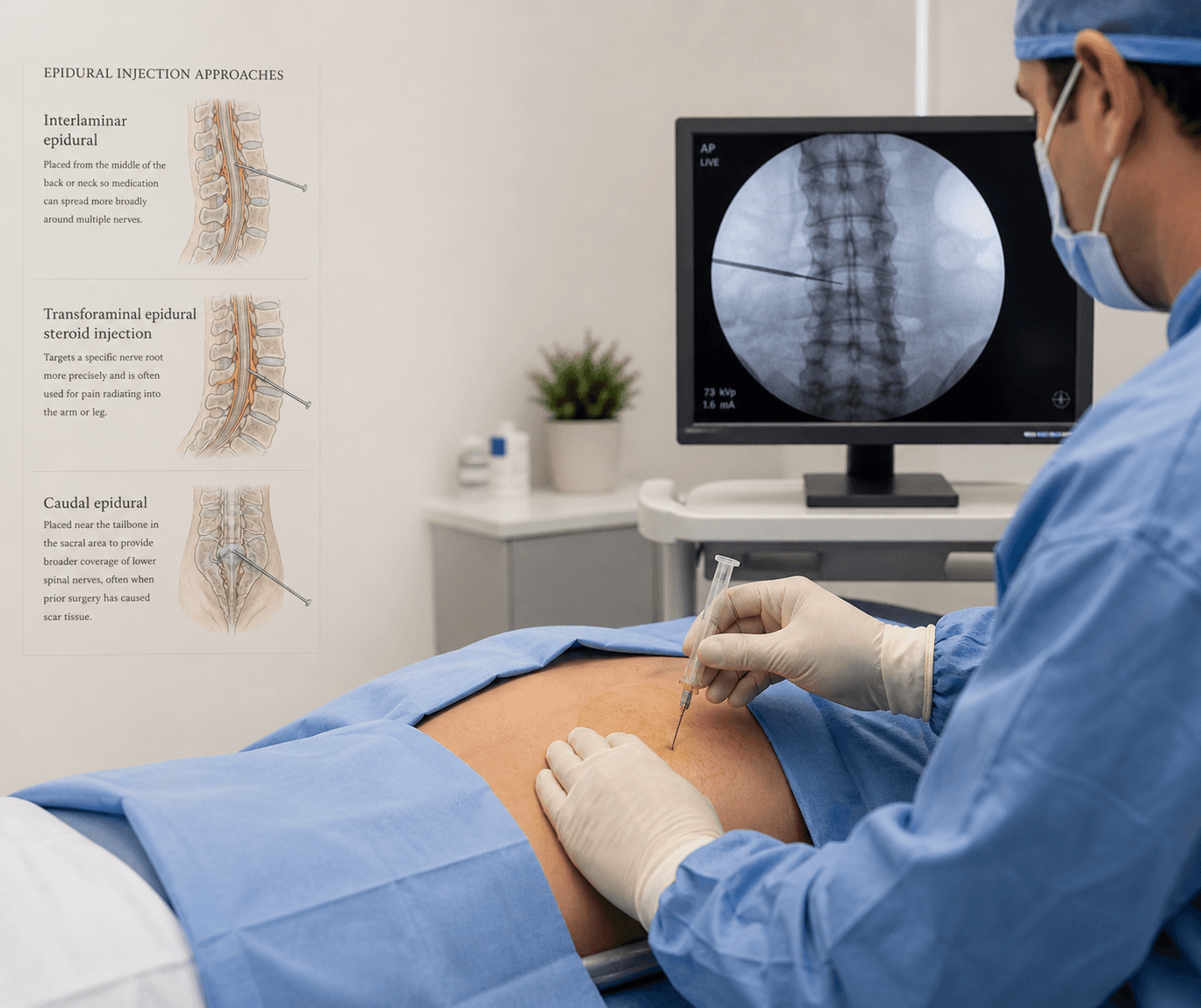
Fluoroscopy helps place medication around irritated spinal nerves.
Most epidural injections include a corticosteroid to reduce inflammation around the affected nerve or nerves. A local anesthetic is often added to provide short-term pain relief and, in some diagnostic cases, to help confirm the injection target.
Contrast dye is used under fluoroscopic guidance to confirm that the needle is correctly positioned before medication is delivered. Patients with a known allergy to contrast dye should notify the clinic before the procedure.
Before your appointment
Blood thinner timing varies by injection type and site. Confirm with the clinic well in advance of your appointment date so you have time to adjust your medications safely under physician guidance.
Epidural injections are minimally invasive and performed with image guidance for safety and accuracy. They may reduce inflammation, relieve nerve pain, improve function, and in some cases delay or avoid the need for surgery.
After the procedure, apply ice packs for 10 to 15 minutes at a time and take acetaminophen if needed. Avoid strenuous activity for 24 to 48 hours before gradually returning to normal activity over a few days.
The clinic can review your symptoms, prior treatment, imaging, and whether this procedure fits into your care plan.
If you have a question after a recent procedure, call the clinic directly rather than waiting for an online response.